

“Infants who actively participate in their daily care routines… are also active and full of initiative beyond the care situation.
They are capable of picking out from their surroundings, objects which interest them, independently getting to know these objects and occupying themselves with them.
Infants who are brought up this way do not demand the same amount of help from adults.”
Dr Emmi Pikler
Engaging Infant Care Routines
My approach has its roots in the work and philosophy of Dr Emmi Pikler, promoting respectful infant care; speaking softly, giving full attention, moving slowly and watching for baby’s cues
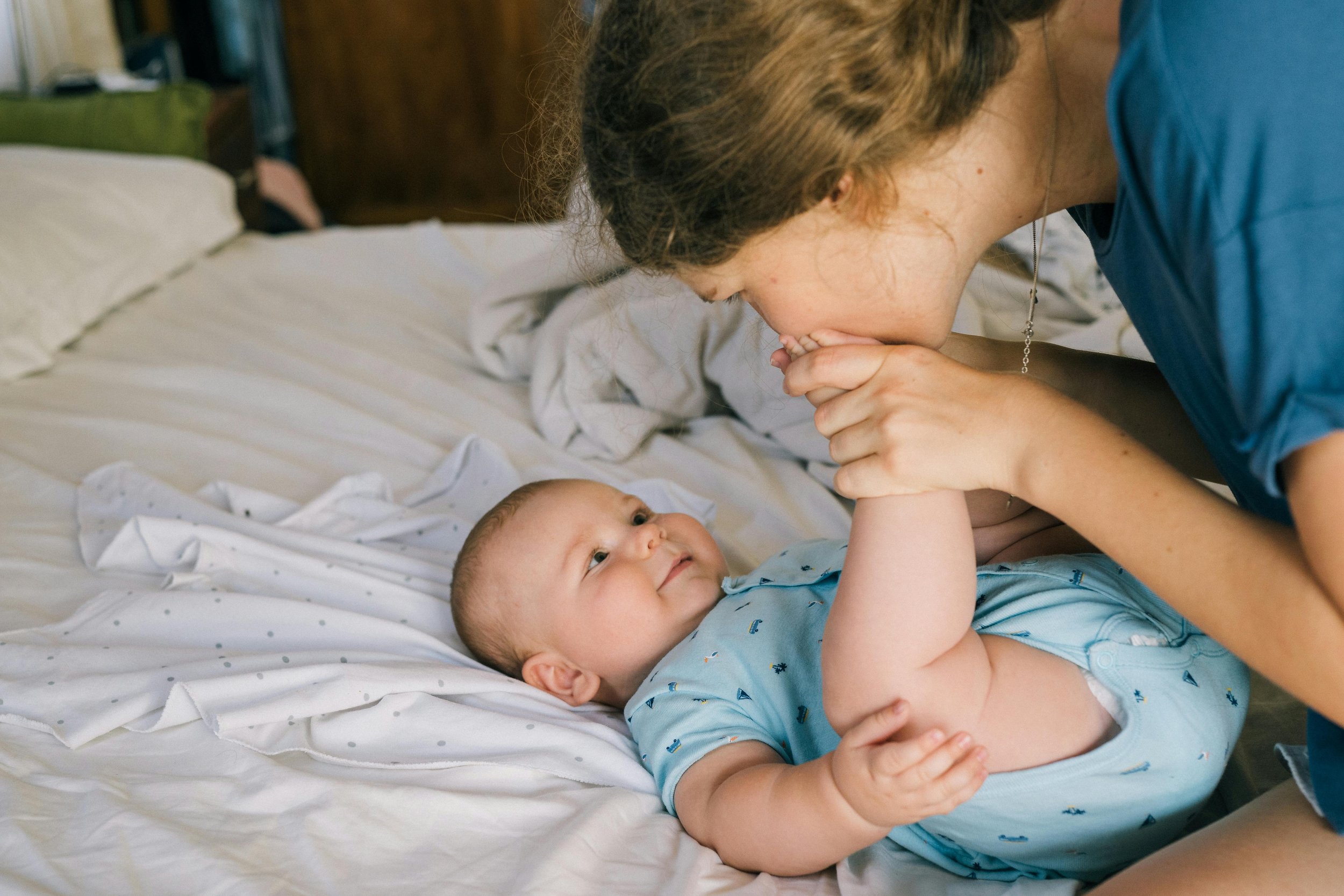
Through daily care activities alone, parents are able to build a healthy secure attachment relationship, stimulate early brain development, nurture a sense of confidence and foster communication, all from day one!
Parents experience:
How to create workable daily routines for their baby
How to provide their baby with mutually enjoyable feeding, diapering, dressing and bathing routines, where the baby becomes a cooperative participant while gaining a sense of confidence
How to develop communication skills that will help the baby to participate in and thrive through daily living activities
How to create a safe, beautiful, free play space for the baby that also gives parents the time and space to attend to their own needs and those of the rest of your family while providing the baby with all the key elements for ideal motor development
How to provide one’s baby with compassionate sleep routines
Attachment Research Study Results
Developmental Psychologist Alan Sroufe states, “Nothing is more important than the attachment relationship.” He explains, “Attachment is a relationship in the service of a baby’s emotion, regulation and exploration. It is the deep, abiding confidence a baby has in the availability and responsiveness of the caregiver.”
Sroufe, together with colleagues at the Institute for Child Development at the University of Minnesota ran a series of landmark studies called the Minnesota Longitudinal Study of Risk and Adaptation (MLSRA). The study takes place over a 35 year period on the long-term impact of secure attachment, revealing that the quality of early attachment reverberated well into later childhood, adolescence, and adulthood, even when temperament and social class were accounted for.
The MLSRA studies showed that children with a secure attachment history were more likely to develop:
Higher self-esteem
Better coping under stress
Better emotional regulation
Closer friendships in middle childhood
Better coordination of friendships and social groups in adolescence
More trusting and positive romantic relationships in adulthood
Happier and better relationships with parents and siblings
More leadership qualities
A greater sense of self-agency
Greater social competence