
PERINATAL SUPPLEMENTS, NUTRIENT SOURCES & RECIPES
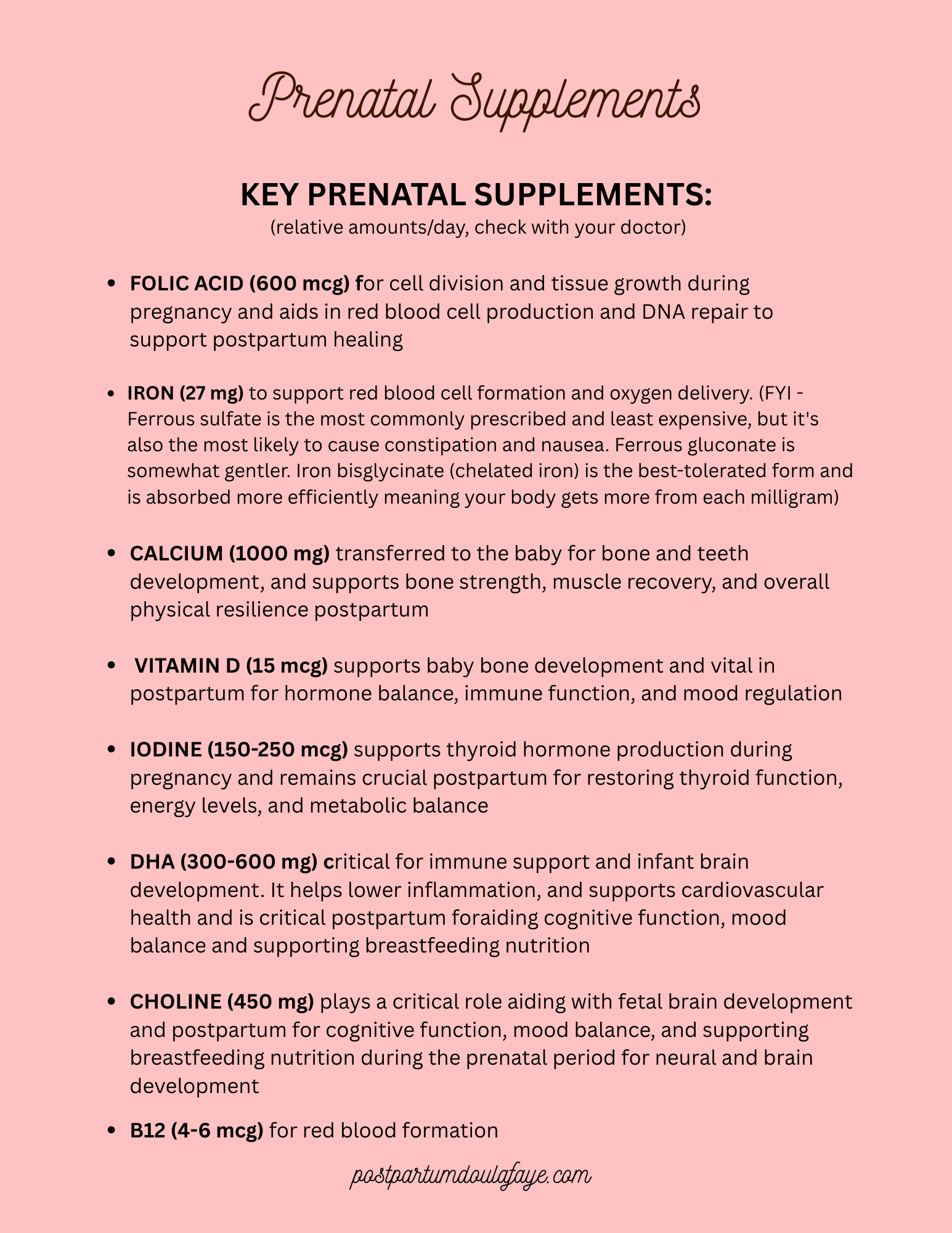
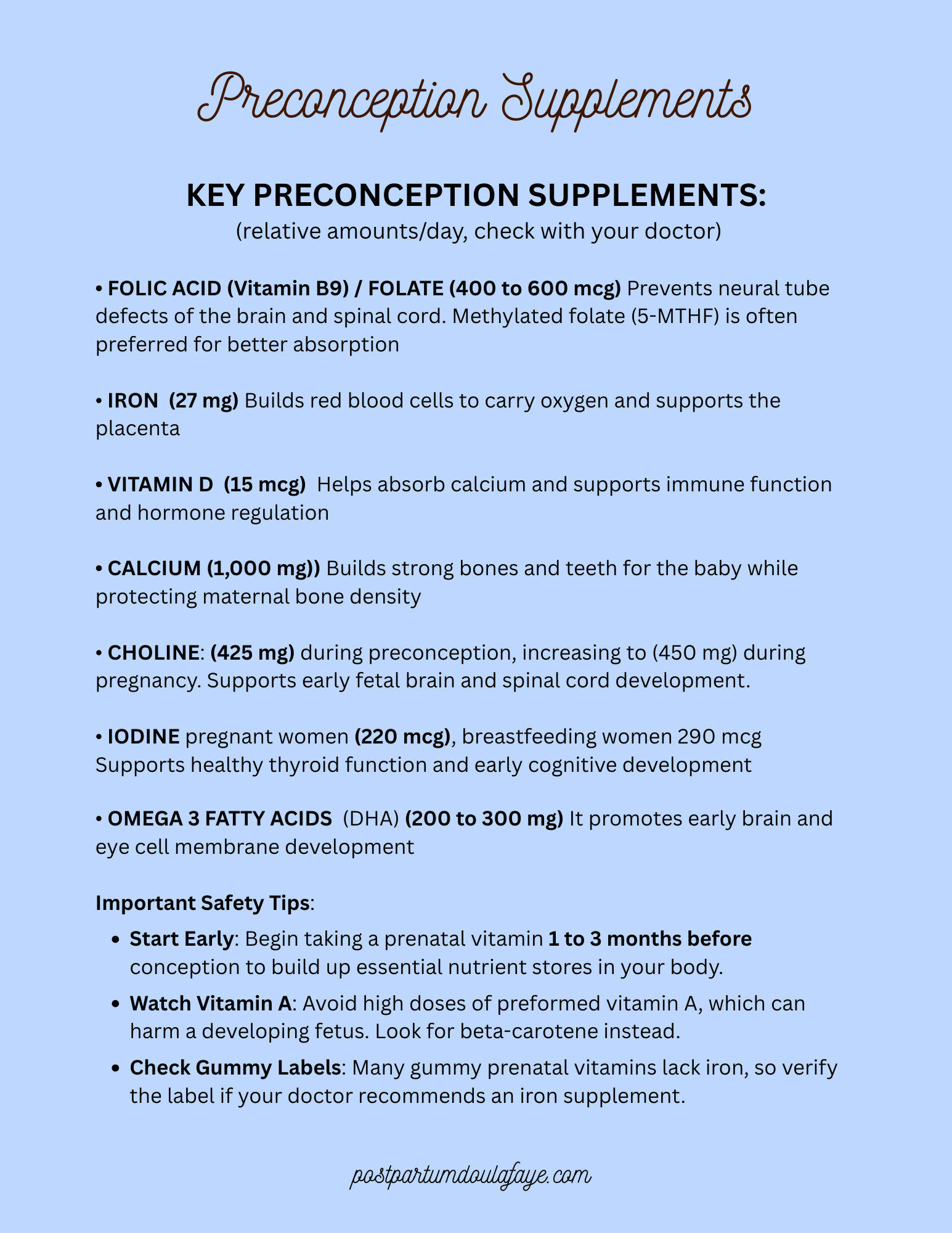
A food-first approach is always the foundation of a healthy pregnancy. Medical professionals view prenatal vitamins not as a replacement for food, but as a mandatory "insurance policy" to bridge the gap for critical nutrients like FOLIC ACID, IRON & IODINE.
Many commercial supplements actually fail to provide adequate amounts of certain bulky nutrients. For example, the daily target for Choline is 450 mg, and Calcium requires 1,000 mg, amounts so large they physically won't fit into a standard one-a-day capsule. Foods such as eggs, dairy and leafy greens actually supplement our supplements.
That being said, synthetic FOLIC ACID is actually more bio-available than natural food FOLATE. The body absorbs roughly 85% of synthetic folic acid when taken with food, but only about 50% of the folate naturally present in foods. Folic acid is absorbed better than food-based folate because it is a stable, simple structure that requires less digestive work. According to the medical professionals, Folic acid is non-negotiable for preventing neural tube defects in the first 28 days of pregnancy.
The recommended 27 mg of IRON per day during preconception and pregnancy, requires eating large amounts of lean red meat, poultry or a perfectly paired plant Iron with Vitamin C. An Iron supplement is likely essential.
There are 4 different forms of Iron Supplements to be aware of:
Plant-Based Iron (Slolron®): Fermented from organic peas. Naturally stored in ferritin for slow-release absorption. Clinically studied and gentle on the stomach.
Iron Bisglycinate (Ferrochel): A chelated form that's better absorbed than ferrous sulfate, with fewer digestive side effects. Still synthetic, but more tolerable.
Ferrous Sulfate: The cheapest form, but also the most likely to cause constipation, nausea, and stomach upset. High doses (65 mg+) overwhelm the digestive system.
Iron Polysaccharide: A complex form that some claim is gentler, but often contains additives and fillers that complicate absorption.
IODINE is one of those nutrients where the RDA may easily be met with foods sources such as Baked Cod, Greek Yogurt, Milk, Iodized salt and Eggs.
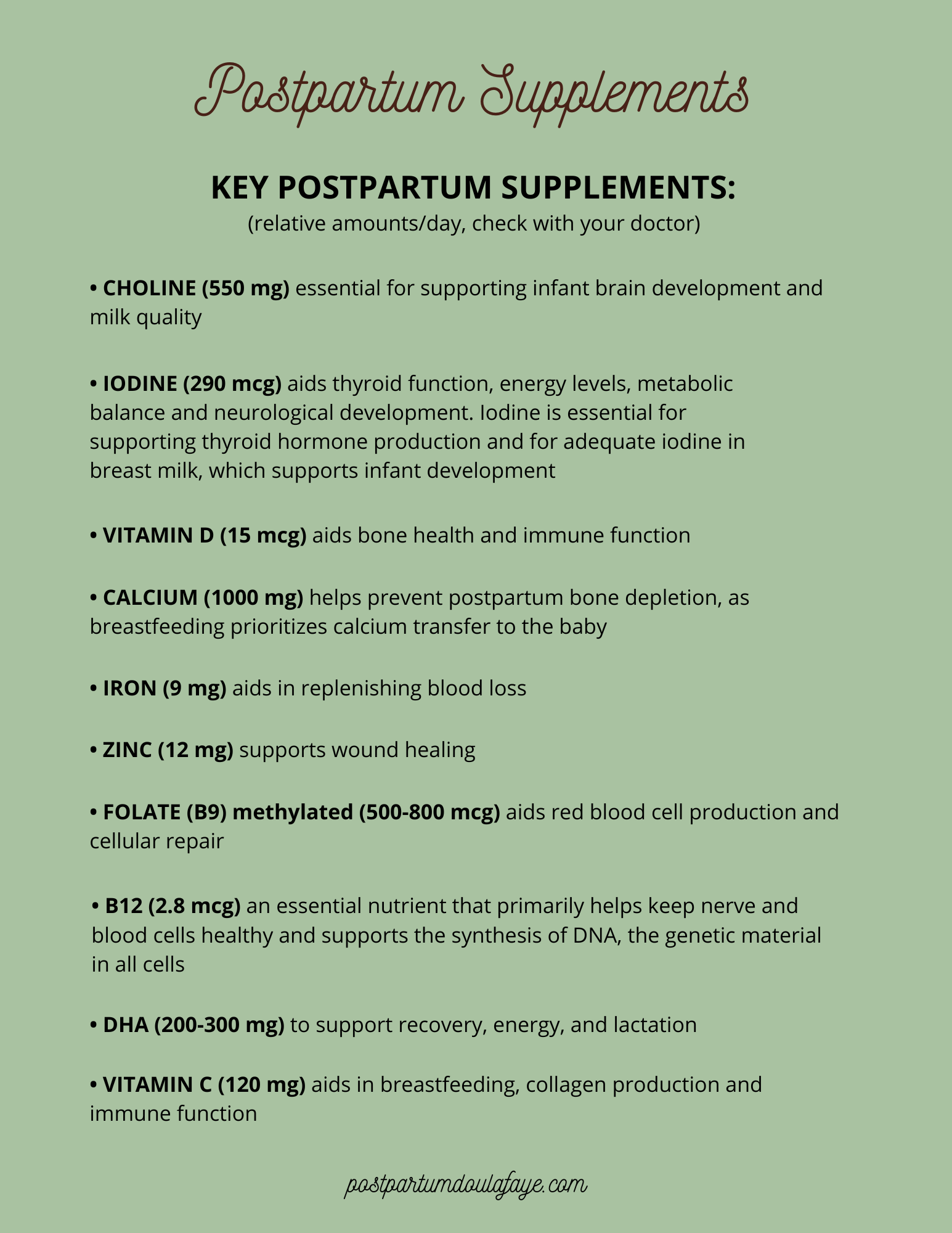
Scroll down to find the KEY SUPPLEMENTS and recommended amounts for your perinatal stage!
Scroll down to FOOD SOURCES for the most nutrient-dense foods to supplement your supplements!
Then scroll down to RECIPES!
FUN FACT:
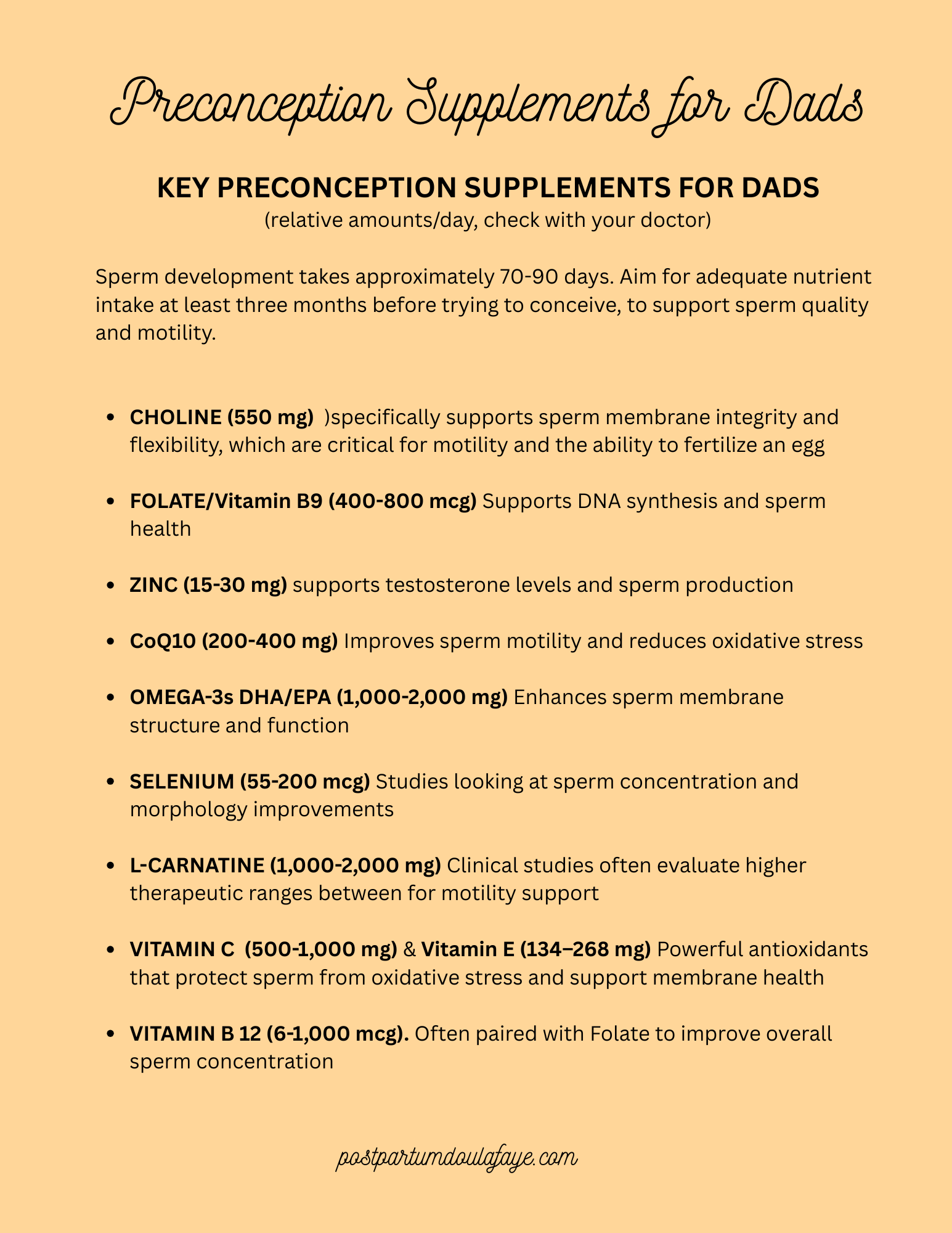
PRENATAL SUPPLEMENTS ARE ALSO ESSENTIAL FOR DADS!
Supplementing with Food
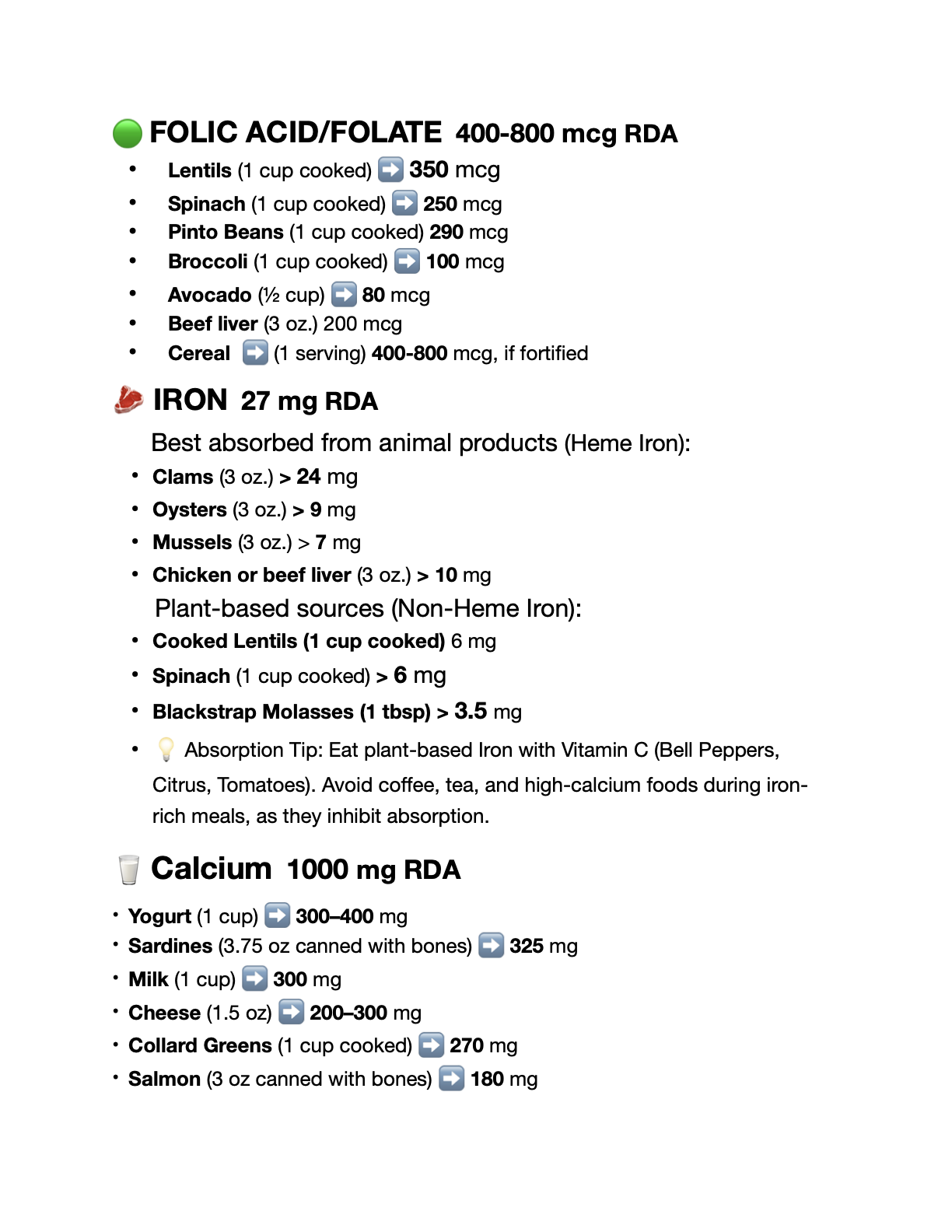
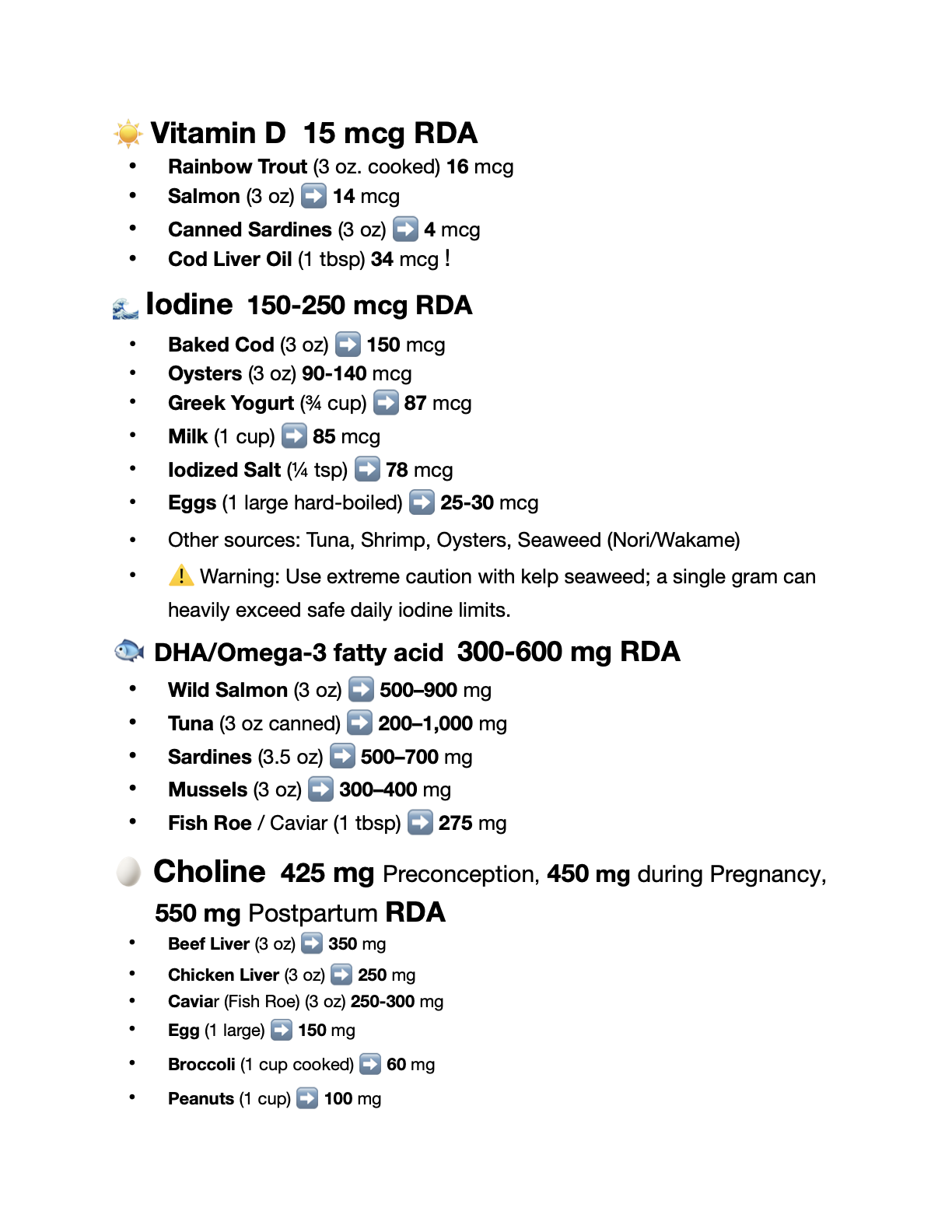
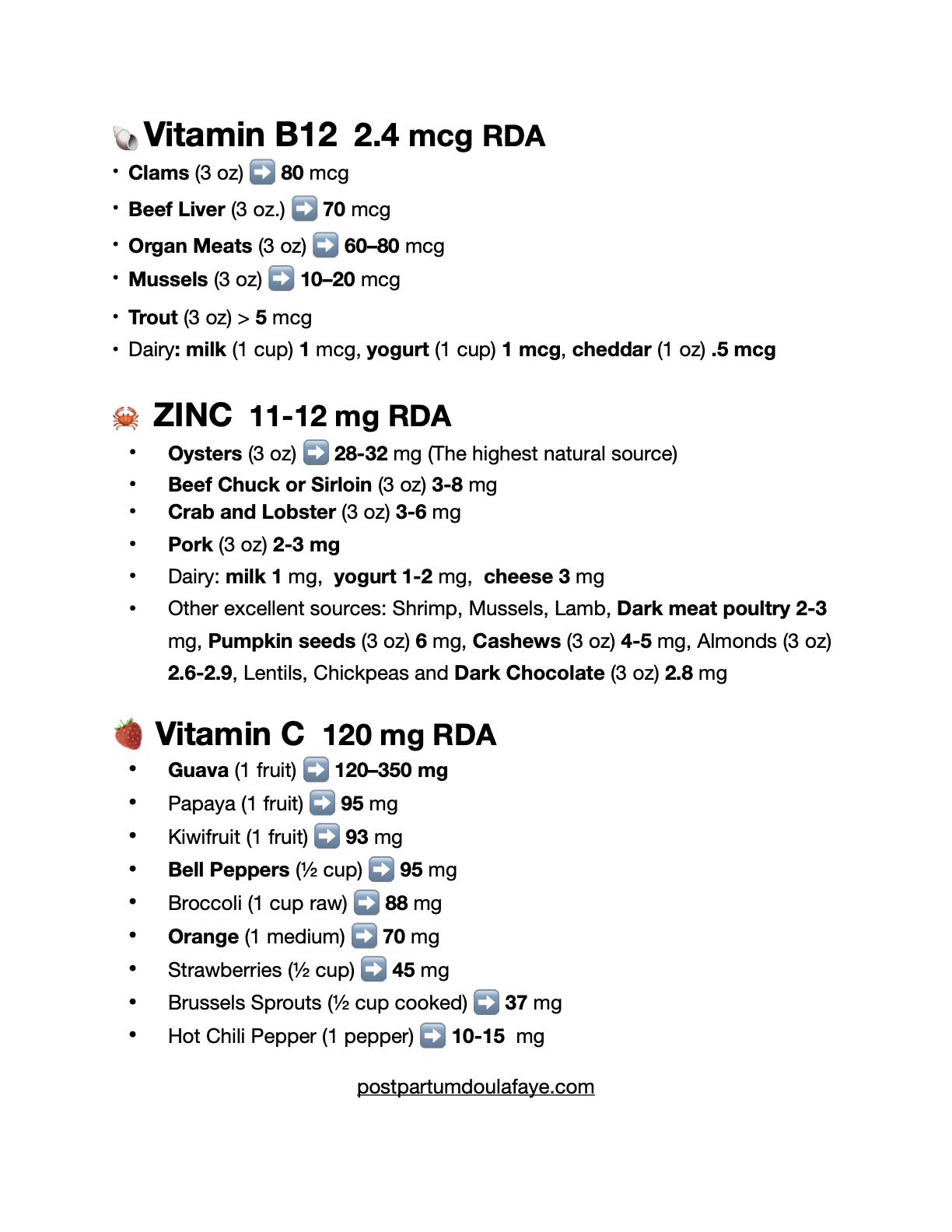
NUTRIENT-DENSE FOODS
LENTILS - Folate (400-800 mcg RDA), Iron (27 mg RDA)
1 cup of cooked Lentils contains 350 mcg of Folate
1 cup cooked Lentils contains 6 mg of Iron
SALMON - Calcium (1000 mg RDA), DHA (300-600 mg RDA), Vit D (15mg RDA)
3 oz of canned Salmon with bones contains 180 mg of Calcium
3 oz of Salmon contains 14 mcg of Vitamin D
3 oz of Wild Salmon contains 500-900 mg of DHA
CANNED SARDINES - Calcium (1000 mg RDA), VIT D (15 mcg RDA), DHA (300-600 mg RDA)
3.75 oz of canned Sardines with bones has 325 mcg of Calcium
3 oz canned Sardines contains 4 mcg of Vitamin D
3.5 oz canned Sardines contains 500-700 mg DHA
OYSTERS - Iron (27 mg RDA,) Iodine (150-250 mcg RDA), Zinc (11-12 mg RDA)
3 oz of Oysters contains 9 mg of Iron
3 oz of Oysters contains 90-140 mcg of Iodine
3 oz of Oysters contains 28-32 mg of Zinc
YOGURT - Calcium (1000 mg RDA), Iodine (150-250 mcg RDA), Zinc (11-12 mg RDA)
1 cup Yogurt contains 300-400 mg of Calcium
3/4 cup of Greek Yogurt contains 87 mg of Iodine
1 cup yogurt contains 1.5 mg of Zinc
CAVIAR - DHA (300-600 mg RDA), Choline (425-550 mg RDA)
1 tablespoon of Caviar contains 275 mg of DHA
3 oz of Caviar contains 250-300 mg of Choline
EGGS - Iodine (150-250 mcg RDA), Choline (150-250 mcg RDA)
1 large hard-boiled Egg contains 25-30 mcg of Iodine
1 large Egg contains 150 mg of Choline
BROCCOLI - Folate (400-800 mcg RDA), Choline (425-550 mg RDA), Vit C 120 mg RDA
1 cup of cooked Broccoli contains 100 mcg of Folate
1 cup of cooked Broccoli contains 60 mg of Choline
1 cup of raw Broccoli contains 88 mg of Vitamin C
CLAMS - Iron (27 mg RDA) Vitamin B12 (2.4 mcg RDA)
3 oz of Clams contains 24 mg of Iron
3 oz of Clams contains 80 mcg of Vitamin B12
MUSSELS - Iron (27 mg RDA), DHA (300-600 mg RDA), Vitamin B12 (2.4 mcg RDA)
3 oz of Mussels contains 7 mg of Iron
3 oz of Mussels contains 300-400 mg of DHA
3 oz of Mussels contains 10-20 mcg of Vitamin B12
TROUT - Vitamin D (15 mcg RDA), Vitamin B12 (2.4 mcg RDA)
3 oz cooked Rainbow Trout contains 16 mcg of Vitamin D
3 oz of Trout contains 5 mcg of Vitamin B12
CHEESE - Calcium (1000 mg RDA), Vitamin B12 (2.4 mcg RDA), Zinc (2.4 mcg RDA)
1.5 oz of Cheese contains 200-300 mg of Calcium
1 oz of Cheddar contains 0.24 to 0.5 mcg of Vitamin B12
3.5 ounces of Cheddar contains 2.6 mg of Zinc